714.897.1700
 Chat
Chat
 Email
Email
 Quotes
 Quick Order
Why Are Solid Carbide Tool Prices Increasing? (APT & Tungsten Explained)
Posted by All Industrial Tool Supply on Mar 27, 2026

If solid carbide cutting tools feel more expensive lately, you’re not imagining it.
Across the industry, pricing is trending upward—and the main driver is something most shops don’t see directly: APT (Ammonium Paratungstate), a key raw material used to produce tungsten carbide.
Understanding what’s behind these changes can help you make smarter purchasing decisions and protect your margins.
What Is APT (Ammonium Paratungstate) and Why Does It Impact Tool Prices?
- APT is a processed form of tungsten and a critical input in carbide production.
- Tungsten carbide makes up the majority of solid carbide tools, and:
- Carbide rod is 88–94% tungsten carbide
- APT-derived tungsten accounts for 60–75% of carbide rod cost
- It represents 35–50% of the total cost of a finished carbide tool
Industry organizations such as the International Tungsten Industry Association note that APT is a key upstream material in the tungsten supply chain, meaning changes at this level directly impact carbide tool pricing.
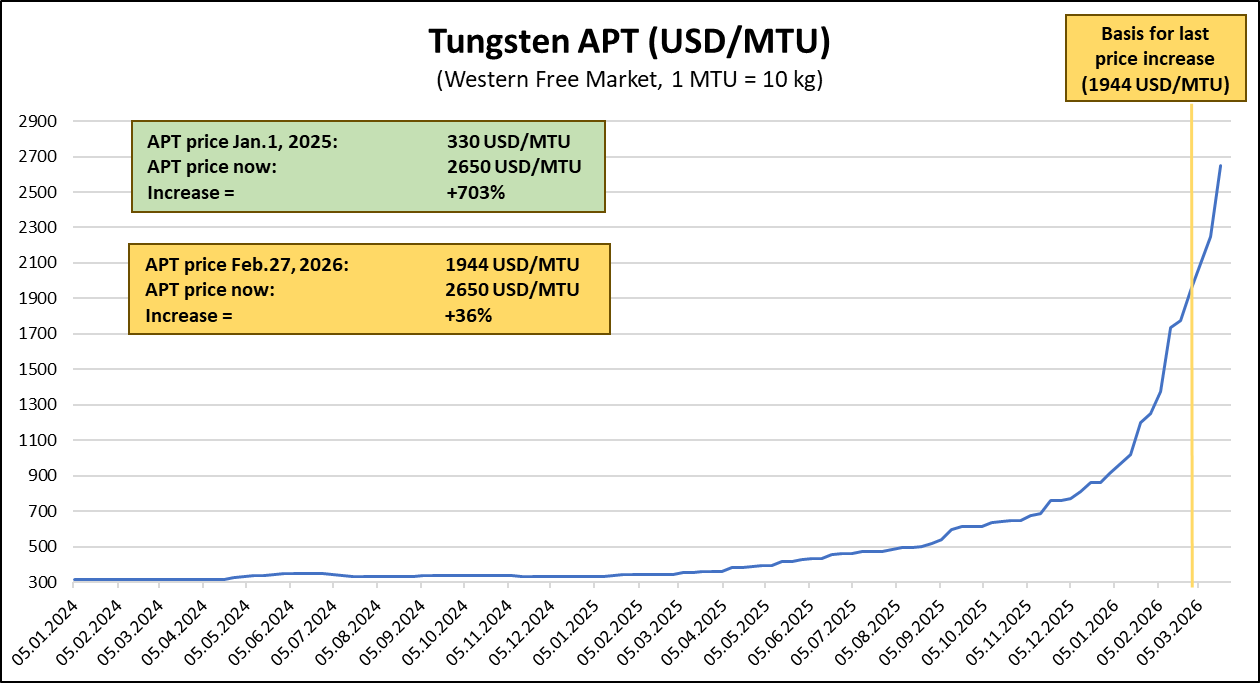
When APT prices rise, tool prices follow.
Why Are Solid Carbide Tool Prices Rising?
There are three main drivers:
- Supply is tight due to the global concentration of tungsten production
- Raw material costs are rising at the mining and processing level
- Geopolitical pressures are limiting availability and increasing volatility
According to the U.S. Geological Survey, a significant portion of the global tungsten supply is concentrated in a single region, making tungsten prices highly sensitive to policy changes and export controls. Tungsten is also classified as a critical material by organizations such as the European Commission, underscoring its strategic importance and supply risks.
The bottom line: When the core material gets more expensive, everything downstream is impacted.
Why Solid Carbide Tools Are Most Affected by Tungsten Prices
Solid carbide tools are especially affected because they rely heavily on tungsten.
Even with grinding, coating, and manufacturing involved, tungsten remains the single largest cost driver in the finished tool.
What Rising Carbide Tool Prices Mean for Machine Shops
This isn’t just a purchasing issue—it impacts:
- Quoting accuracy
- Cost per part
- Inventory planning
- Tool standardization
The bottom line: These increases are tied to real upstream market conditions, not arbitrary pricing changes.
What Shops Need to Know About Tool Pricing
For shops running high volumes or long-term production, these changes go beyond price.
They directly impact:
- Margin stability
- Long-term quoting confidence
- Tool availability at scale
- Production continuity
The bottom line: with tungsten driving a significant portion of carbide cost, many manufacturers are preparing for continued volatility rather than a short-term spike.
It’s Not Just Price—Tool Availability Is Also at Risk
In addition to rising costs, supply constraints can also affect:
- Lead times
- Product availability
- Substitution flexibility
For high-production environments, the risk isn’t just paying more—it’s not having the tool when you need it.
The bottom line: Planning ahead helps reduce both cost risk and downtime risk.
How to Evaluate Tooling Costs in a Rising Price Environment
Instead of focusing only on price per tool, many shops are putting more focus on:
- Cost per part
- Tool life and consistency
- Cycle time impact
- Process reliability
Organizations like the Society for Manufacturing Engineers (SME) frequently emphasize that tooling decisions should be evaluated based on total process cost, not just unit price.
How to Stay Ahead of Rising Tool Costs
- Plan early for specials
Custom tooling is most exposed to material swings—getting ahead helps avoid future increases - Set up early for blanket orders
Lock in pricing and ensure supply for repeat tools - Time orders around price increases
We share insights so you can act before pricing moves - Align tooling with upcoming jobs
Review forecasts to secure tools ahead of demand - Evaluate tool life and cost per part
More life per tool matters more than ever. Reviewing your setup can help reduce tool consumption and improve overall cost
The Bottom Line on Carbide Tool Pricing
Solid carbide tool prices are increasing largely due to rising tungsten costs, with APT at the center of that shift.
These changes are driven by global supply and material dynamics, but understanding them puts you in a stronger position to adapt.
If you’d like to talk through what this means for your operation, we’re always available to review your tooling strategy and help you plan ahead.